Decentralized Applications (dApps) on Solana (DEX): Jupiter

Imagine trying to swap crypto on Solana, you have all these different crypto exchanges, or DEXs, each holding a bit of the tokens you wanted, but with different prices and amounts. So, you'd have to jump from one DEX to another just to find the best deal and avoid losing money on bigger trades. Stressful right?
Anyways, that's exactly why Jupiter showed up. A super-smart system that acts like your personal crypto shopping assistant.

Jupiter is a Decentralized Exchange (DEX) Aggregator launched in October 2021 on the Solana blockchain. It was co-founded by the pseudonymous 'Meow' and Ben Chow.
Designed to optimize token swaps, Jupiter sources liquidity from dozens of Solana-based DEXs and Automated Market Makers (AMMs), such as Orca, Raydium, Meteora, Phoenix, Lifinity, etc., to find the best swap prices with minimal slippage.
It aims to create a 'full-stack DeFi ecosystem' that rivals centralized exchanges (CEXs) by offering seamless, cost-efficient trading and advanced financial tools, driving decentralized adoption. Its slogan, 'the everything exchange for everyone,' reflects its ambition to be a comprehensive DeFi platform.
Jupiter handles a dominant share, often over 70%, of Solana’s DEX trading volume, cementing its position as the largest DEX aggregator on the network. As of late July 2025, according to DefiLlama, Jupiter's daily trading volume frequently surpasses $800 million, consistently serving hundreds of thousands of unique wallets.
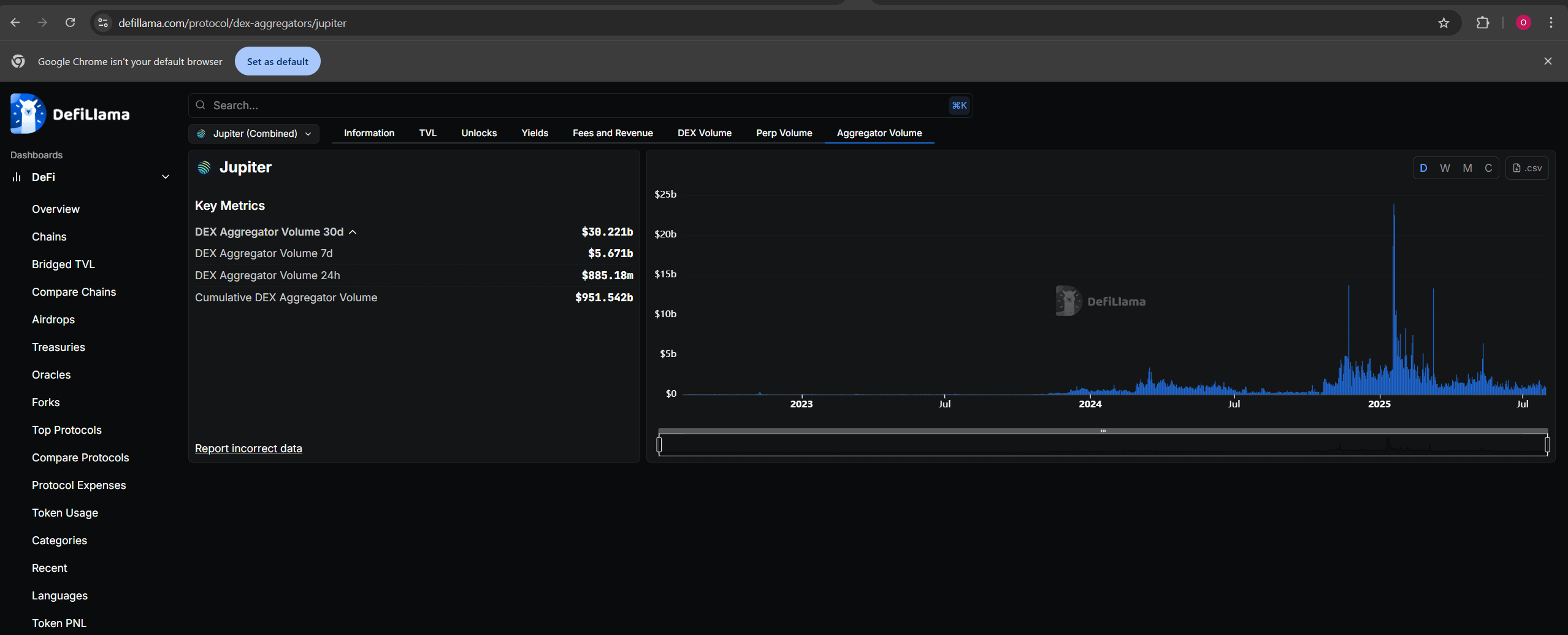
The platform's cumulative trading volume has seen exponential growth, reportedly surpassing $1 trillion as of June 2025, a significant milestone that emphasizes its crucial role in the Solana ecosystem and its strong competitive position against other leading DEXs.
Key Features
Smart Routing and Trade Splitting
Jupiter’s routing engine analyzes liquidity pools across multiple DEXs and Automated Market Makers (AMMs) e.g., Orca, Raydium, etc., to find the best swap route. It supports trade splitting, breaking large trades into smaller portions across different pools to ensure users get the best possible price across the entire ecosystem..
For example, When swapping a large amount of PENGU for USDC, let’s say 100,000 PENGU for USDC. Jupiter scans all connected DEXs on Solana, if it sees that the best route isn't one single trade it will split your order, sending part through let’s say Orca (it sends 40,000 PENGU to Orca's PENGU-USDC pool.)...
…and another part through Raydium's SOL-USDC pool (sending 30,000 PENGU to Raydium, first swapping to SOL (PENGU-SOL pool) and then SOL to USDC (SOL-USDC pool), sending the remaining 30,000 PENGU to Lifinity.
By splitting the trade and finding the most efficient path across multiple DEXs and even through intermediate tokens, Jupiter ensures you receive the maximum possible USDC for your 100,000 PENGU, significantly reducing slippage compared to executing on a single DEX.
Limit Orders
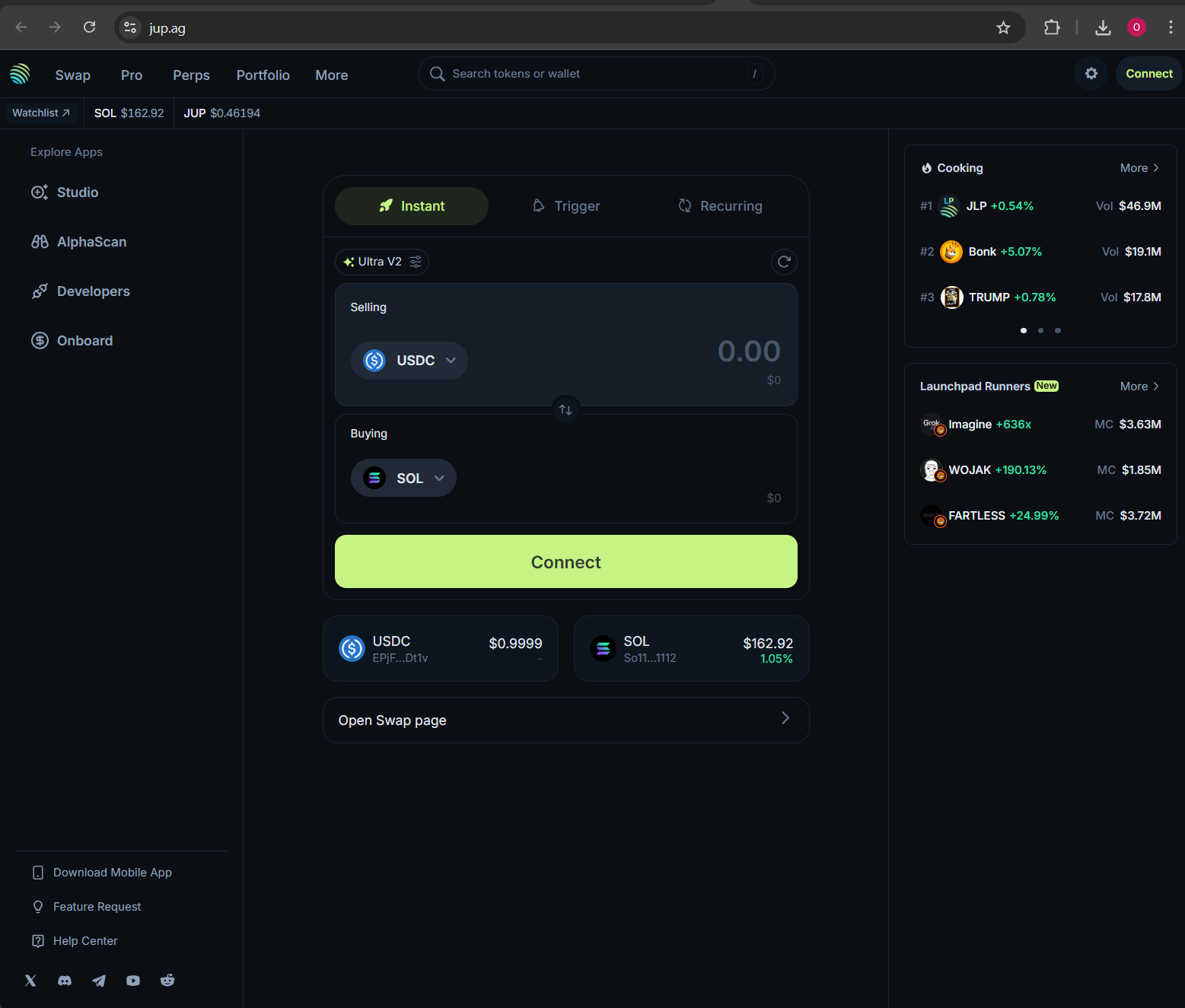
Unlike most AMM-based DEXs, Jupiter offers limit orders, allowing users to set specific buy/sell prices, executed automatically when market conditions are met. This mimics CEX functionality, with orders held on-chain without an order book.
For example, You want to buy JUP when its price drops to $0.50. You set a limit order for 100 JUP at $0.50. Jupiter's system automatically executes the trade for you if and when JUP's price hits that exact target, even if you're offline.
Dollar-Cost Averaging (DCA) and Value Averaging (VA)
DCA enables users to automate recurring token purchases at fixed intervals, reducing market timing risks. VA adjusts purchase amounts based on market conditions for optimized returns.
For example, let’s say you decide to invest $50 in Bonk every Tuesday for the next month. You set up a DCA order on Jupiter, and it automatically buys $50 worth of Bonk for you each week, averaging out your purchase price over time.
Again, if you aim for your PYTH holdings to grow by $100 each month. Jupiter's VA strategy might buy more PYTH if its price drops below your target value, or less if it rises, to keep you on track with your desired portfolio value growth.
In a nutshell, for long-term strategies, Jupiter enables you to automate recurring token purchases at fixed intervals (DCA) or adjust purchase amounts based on market conditions (VA), helping to mitigate market volatility.
Perpetual Futures Trading
Jupiter Perps allows leveraged trading (up to 100x) on various assets like SOL, wBTC, etc., with liquidity provided by the JLP (Jupiter Liquidity Provider) pool. This offers opportunities for both traders and liquidity providers, traders borrow from the pool, generating fees for LPs.
For example, You believe SOL will rise. You use Jupiter Perps to open a 5x leveraged long position on SOL with USDC. If SOL's price increases by 10%, your position's value would increase by roughly 50% (minus fees), amplifying your potential gains.
Cross-Chain Bridging
Jupiter integrates with Wormhole for asset transfers between Solana and other chains, simplifying cross-chain swaps.
For example, You have USDC on the Ethereum blockchain but want to use it to buy a new meme coin on Solana. Through Jupiter's interface, you can initiate a bridge transaction via Wormhole to move your USDC from Ethereum to Solana, and then immediately swap it for the desired Solana-based token, all within a streamlined experience.
Tokenomics and Governance
Its JUP token was launched in January 2024, with a maximum supply of 10 billion and a circulating supply of approximately 3 billion as of July 2025. JUP’s price is currently around $0.56 as of July 29, 2025.
The JUP token powers the Jupiter DAO, enabling community governance over emission plans, protocol upgrades, and launchpad initiatives. Over 900,000 holders participate in decisions, with 50% of the token supply allocated to the community via airdrops and grants.
The Jupuary 2025 airdrop distributed 700 million JUP tokens to users, stakers, and contributors, valued at approximately $616 million at the time of distribution.

Jupiter’s Importance in the Solana Ecosystem
Liquidity Aggregation: Jupiter addresses liquidity fragmentation by routing trades through multiple DEXs, ensuring best prices and reducing slippage. It handles over 70% of Solana’s DEX volume, making it a critical infrastructure layer.
Ecosystem Integration: Jupiter powers swaps for wallets like Solflare and Phantom, and its APIs enable developers to integrate its routing into dApps.
Community Engagement: The Jupiverse community, dubbed “Space Catdets,” drives governance and innovation, with active participation on X, Reddit, and Discord. The JUP token incentivizes user involvement through airdrops and staking rewards.
Driving Adoption: Jupiter’s low fees, fast execution, and advanced tools (e.g., DCA, perps) make DeFi accessible, rivaling CEXs and promoting Solana’s adoption.
User Experience
Accessibility: Jupiter’s intuitive interface supports beginners with simple swaps and experts with customizable settings (e.g., slippage, MEV protection). Its Jupiter Mobile app offers real-time portfolio tracking and AlphaScan for token discovery.
Low Costs: Leveraging Solana’s low fees, many swaps incur no gas fees due to Jupiter’s transaction relaying system. While every Solana transaction has a minimal base fee, Jupiter optimizes transactions to keep costs exceptionally low, often effectively around a few cents per complex trade, significantly less than many other chains.
Security: Jupiter is non-custodial, with funds held in user wallets (e.g., Jupiter Mobile, Solflare, Phantom etc.)
Challenges: Advanced features like perps and limit orders may overwhelm beginners, and U.S. users face front-end restrictions due to regulatory concerns, requiring VPNs or alternative interfaces.
Recent Developments (as of July 2025)
Jupiter Pro
Jupiter Pro is a professional trading dashboard with advanced charts, order books, and AlphaScan, a tool for discovering new token opportunities. It was designed to bridge the gap between the simplicity of a swap interface and the complexity of a full-fledged exchange, offering a more powerful and analytical environment for users to execute their trading strategies.
Crucially, Jupiter Pro doesn't replace Jupiter's core smart routing and trade splitting (powered by Juno v4, one of the recent developments of Jupiter); instead, it builds upon them. It provides deeper transparency and insight by showing specific multi-hop routes and trade splits, helping users understand and validate the optimal pricing.
This professional interface allows traders to manage complex strategies like Limit Orders and Perpetual Futures, leveraging market insights to influence smart-routed trades for swift execution, effectively providing a CEX-like trading environment on Solana.
Juno (V4)
Juno (V4) is Jupiter's latest and most advanced liquidity engine, representing the fourth major iteration of their routing technology (following earlier versions like Metis and JupiterZ).
A significant leap, Juno (v4) introduces meta-aggregation, enabling it to pull liquidity from a wider array of sources including other aggregators, and features a self-learning mechanism that constantly refines routing paths for optimum performance, translating to even lower slippage and higher reliability for users.
JLP Loans
JLP Loans was introduced to allow users leverage their Jupiter Liquidity Provider (JLP) token holdings by stablecoins like borrowing USDC directly against them.
This unique lending mechanism enables JLP holders to access liquidity without having to sell their underlying JLP, thus maintaining their exposure to the JLP pool's yield generation from Jupiter's perpetuals trading.
This brings new avenues for capital efficiency within DeFi, demonstrated by the rapid utilization of its initial allocations (e.g., $150 million fully utilized within 24 hours) and a design where liquidations are handled by burning JLP collateral to minimize market impact.

Jupiter Studio
Jupiter Studio launched in July 2025, is a groundbreaking no-code token creation platform designed for the Solana ecosystem. It simplifies the process, allowing anyone to easily launch new digital assets – from community tokens to meme coins – without needing to write complex code.
The platform provides essential tools like customizable vesting schedules, liquidity locking, and token metadata management, ensuring a professional launch.
Jupiter Studio is a core part of Jupiter's strategy to become the all-in-one superapp for the Solana ecosystem, aiming to control the entire token lifecycle from creation to trading and facilitating rapid innovation and growth in the number of on-chain assets.
Jupiter Verify V4
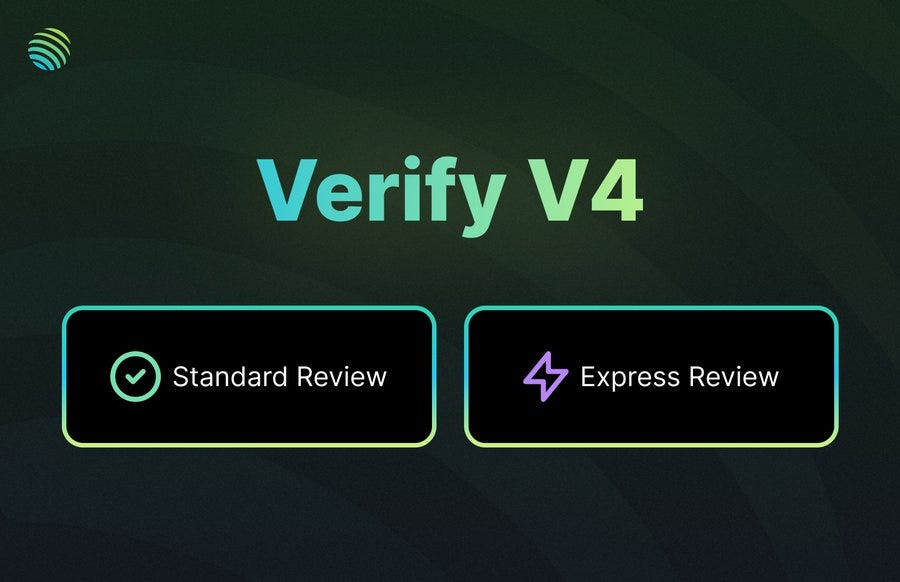
Jupiter Verify V4, officially launched in late July 2025, is Jupiter's upgraded and most comprehensive token verification system designed to combat impersonator tokens and enhance trust across the Solana ecosystem.
As a critical public good, it provides a streamlined, transparent, and effective process for validating token legitimacy.
Jupiter Verify V4 is a core part of Jupiter's strategy to safeguard users within the rapidly growing Solana ecosystem, providing a reliable source of truth for token authenticity and facilitating a more secure and trustworthy trading environment. It aims to protect traders from deceptive altcoins and supports builders by providing a clear pathway for legitimate token recognition.
Future Developments
Jupiter has an ambitious roadmap, including plans for sUSD, a yield-bearing stablecoin backed by Solana Liquid Staking Tokens (LSTs), and further cross-chain bridging enhancements, and so much more. You just have to stay locked-in to enjoy them all.
Guiding this extensive development is Meow’s Web4 Vision, a significant and recent concept defining a new frontier for the decentralized web. This is a philosophical and strategic outlook for the on-chain world which will be driven by Solana's unique capabilities and Jupiter's crucial role within it.
At its essence, Meow's Web4 is a call to evolve the decentralized web beyond mere speculation towards social money. It envisions a future with millions of community-aligned tokens, billions of on-chain users, and a Jupiverse serving as the central transactional and infrastructure hub on Solana.
Key to realizing this vision is building highly scalable, user-friendly infrastructure like the planned Jupnet, and democratizing token creation through platforms like the recently launched Jupiter Studio. It's a foundational, forward-looking direction for Jupiter's continued growth and impact.
Getting Started with Jupiter
Set Up a Wallet: Use the Jupiter Quick Account feature, or Download Jupiter Mobile or use a Solana-compatible wallet like Solflare or Phantom.
Fund Wallet: Purchase SOL, you can buy directly from Jupiter or tokens via exchanges (DEX or CEX e.g., Raydium) and transfer to your wallet.
Connect to Jupiter: Visit jup.ag, connect your wallet, and select tokens for swapping.
Trade or Provide Liquidity: Use Jupiter’s swap interface, set limit orders, or deposit into the JLP pool for fees and rewards
Participate in Governance: Stake JUP tokens to vote on proposals or join airdrops.
Final Thoughts
Jupiter stands as a true powerhouse within the Solana ecosystem, fundamentally reshaping how users interact with decentralized finance. Far more than just a DEX aggregator, its relentless innovation, from sophisticated Smart Routing and advanced trading tools like Limit Orders and Perps, to groundbreaking initiatives like JLP Loans and Jupiter Studio positions it as a comprehensive DeFi superapp.
Reflecting on Meow's Web4 vision, Jupiter is not merely optimizing current DeFi, but actively building the infrastructure for a future where on-chain activity is seamless, accessible, and driven by community-aligned social money.
Its dominant market share, robust features, and forward-looking roadmap solidifies Jupiter's role as a central driver, driving both efficiency and adoption on Solana and shaping the next frontier of the decentralized web.
Honestly, I hope Jupiter can truly pave the way for billions to come on-chain through simple, secure, and useful experiences. I'm hoping to see Jupiter lead us into a DeFi world that is not just powerful, but also intuitive and genuinely human-centric.
Official Links
Web: https://jup.ag/
X (formerly Twitter): https://x.com/JupiterExchange/
Discord: https://t.co/bupt7qkh4M
References
Arslan Butt. (Jul 22, 2025). Jupiter JUP Surges 40% in July as $150M DeFi Push Nears $3B TVL Milestone
Backpack Learn. What is Jupiter Studio? https://learn.backpack.exchange/articles/what-is-jupiter-studio
Bitget News. (Jun 22, 2025). Jupiter: Platform Trading Volume Surpasses $1 Trillion
https://www.bitget.com/news/detail/12560604828044
Jupiter Develop. About Routing
https://dev.jup.ag/docs/routing/
KuCoin News. (Jan 23, 2025). Jupiter’s $616M Solana Airdrop: The 2025 JUP Token Guide
https://www.kucoin.com/news/articles/jupiter-s-616m-solana-airdrop-the-2025-jup-token-guide
Meow. (Jun 5, 2025). Web4: Social Monies
https://x.com/weremeow/status/1930409401074233478?t=DIgTTsrhucCAiS37x4YZiQ&s=19
Solflare. Jupiter Exchange - The Liquidity Engine of Solana DeFi
https://www.solflare.com/ecosystem/jupiter-exchange-the-liquidity-engine-of-solana-defi/
TinTucBitcoin. (May 20, 2025). Jupiter Integrates Time.fun: Fast Trading of Time Tokens